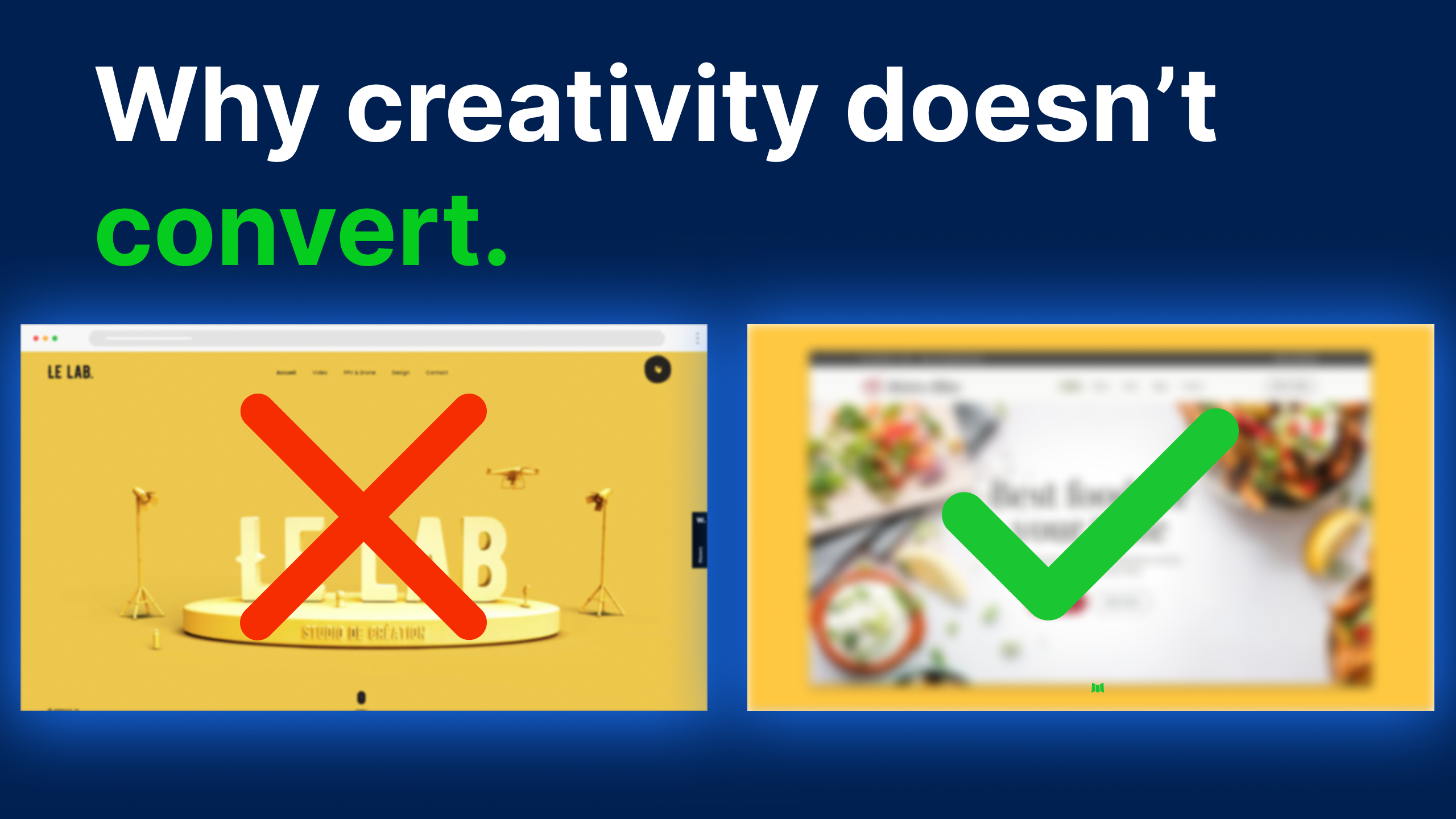
At Upscale Media, we spend a significant amount of time auditing and rebuilding websites that look acceptable but fail to produce measurable results. After years of hands-on implementation across multiple industries, a clear pattern has emerged: high-converting websites follow a small set of foundational principles.
Studies consistently show that the vast majority of prospective customers visit a company’s website before making a purchase decision. As a result, a website is no longer a passive asset—it is a primary decision-making interface.
A high bounce rate is rarely caused by traffic quality alone. In most cases, it is a direct consequence of poor design structure, unclear messaging, or outdated visual presentation.
Common design-related conversion blockers include:
Modern websites must evolve alongside user expectations. Platforms like Facebook demonstrate this clearly: while core functionality remains stable, presentation and interaction models continuously improve. Websites that fail to evolve introduce friction before meaningful engagement occurs.
User experience is not defined solely by visual design. It is defined by how efficiently a user can move from entry point to desired outcome.
User workflows consist of intentional pathways created through:
When workflows are unclear, users hesitate. When workflows are intuitive, users progress naturally.
A helpful analogy is foot traffic through grass: repeated behavior forms a clear path. Effective websites surface the most efficient path immediately, reducing cognitive load and decision fatigue.
Optimizing workflows often improves conversion rates without altering pricing, copy length, or service offerings.
Trust is a prerequisite for conversion.
Before evaluating features or pricing, users subconsciously assess whether a business appears credible, stable, and professional. Website design plays a decisive role in this evaluation
High-impact trust signals include:
Authority is communicated through execution, not claims. Minor inconsistencies—such as mismatched fonts or uneven spacing—can erode trust even when the underlying service is strong.
Organic search visibility is a foundational driver of sustainable traffic and conversions.
Strategic keyword usage allows search engines and AI-based retrieval systems to clearly understand:
Effective keyword implementation focuses on relevance rather than repetition. Keywords should be naturally integrated into:
When content aligns with user search intent, websites reduce dependency on paid acquisition channels while increasing long-term discoverability.
Design trends are not purely aesthetic. They reflect changes in user behavior, device usage, and interaction expectations.
Recent trends that have shaped user trust and engagement include:
Staying current does not require adopting every trend. It requires understanding which patterns users associate with modern, credible businesses and implementing them selectively.
Outdated design patterns often signal operational risk, even when that perception is inaccurate.
High-performing websites are built through the alignment of multiple systems rather than isolated tactics. The most consistent conversion improvements occur when the following elements work together:
When these principles are applied cohesively, conversion becomes a byproduct of clarity and confidence rather than aggressive persuasion.
This framework is applicable across B2B, service-based businesses, and digital platforms where trust and decision-making speed are critical.
